
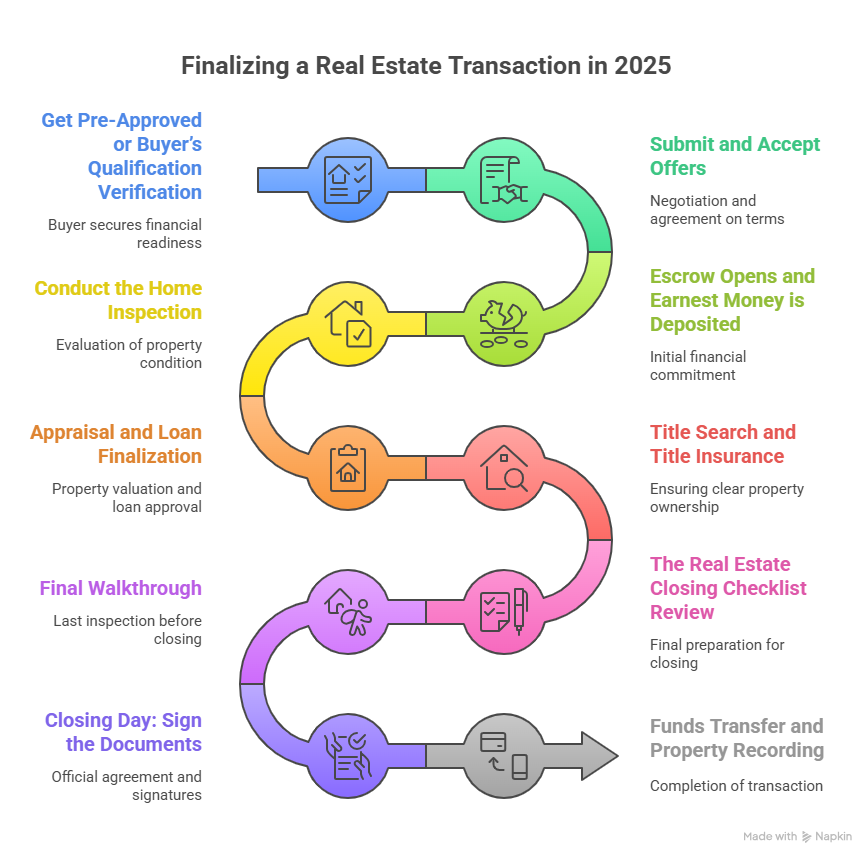
Completing a real estate transaction always is the most exhilarating as well as the most challenging part of the journey of buying and/or selling real estate. Whether you are a first-time seller, first-time buyer, seasoned real estate seller, vet, or an investor, knowing how the closing process works will allow you to save time, not make expensive errors, and be more confident in getting to the finish line and closing the deal.
In this guide, we will assist you in searching and analyzing the closing process of real estate. We will discuss the most common issues and obstacles that are encountered during the closing process, as well as provide some real estate advice on negotiating that will enable you to close in a more efficient, faster, and smarter way to finish the deal.
1. Get Pre-Approved or Buyer’s Qualification Verification
It’s critical to confirm their financial capability first before initiating any negotiation. What is a mortgage pre-approval? This is not merely a ballpark estimate; mortgage pre-approval is a document issued by a lender stating that the buyer is able to obtain a certain amount of funds.
Why Is Pre-Approval Significant
- Helps close the real estate transaction faster
- Amplifies buyer’s negotiation power
- Lessens chances of financing problems close to the time of purchase
2. Submit and Accept Offers
After the buyer secures their financing, they can submit a formal offer. Whether you are the seller or the agent, there are other vital factors to review other than the selling price, including offer contingencies, timelines for closing, earnest money, and type of financing.
Important Elements to Review
- Amount of earnest money
- Inspection contingency
- Financing contingency
- Appraisal contingency
- Proposed closing date
Timing for this step requires a certain level of real estate negotiation skills. To avoid any potential delays and to stabilize the transaction for both the buyer and seller, a properly negotiated contract is vital.
3. Escrow Opens and Earnest Money is Deposited
As soon as a seller accepts an offer, the buyer is required to place a certain amount of earnest money into the escrow account. This acts as a commitment and allows both parties to have a neutral and secure transactional office.
What Happens During Escrow
- Third-party hold funds until conditions are met
- A title search is initiated
- Inspection and appraisal are scheduled
- Closing tasks begin
4. Conduct the Home Inspection
A home inspection is a very crucial step in the order of the contract to close. This step allows buyers to see if there are any underlying structural or repair issues that are hidden.
What to Expect
A licensed inspector examines major systems
- Inspection report highlights issues
- Possible renegotiation or repair requests
- Possible Outcomes
- Buyer requests repairs or credits
- Seller agrees or renegotiates
- Buyer accepts property “as-is.”
- Deal falls apart (rare if managed well)
5. Appraisal and Loan Finalization
If buyers do not have enough liquid capital and require financing from a lender, an independent appraisal is required to confirm the value of the home.
Important Aspects of the Appraisal
1. Tests the worth of the home versus the purchase price.
2. Protects the lender from losing money and losing value in the home.
3. Can result in a rejection and a higher value appraisal from the lender if the price of the home is considered too high.
If the appraisal value is lower than expected, the options are:
1. Lower the home purchase price.
2. Cover the difference from the appraisal value to the purchase price.
3. Appeal the appraisal value.
4. Leave the deal if the contract allows it.
6. Title Search and Title Insurance
The title search protects the buyers’ legal rights by confirming that the property is free of legal conflicts and is legally transferable.
What a Title Search Checks For:
1. Outstanding taxes.
2. Fraudulent ownership transfers.
3. Ownership disputes.
4. Existing liens.
5. Easements.
6. Boundary disputes.
7. The Real Estate Closing Checklist Review
Being organized keeps things running smoothly. Here is a slimmed-down version of the checklist.
- Real Estate Closing Checklist
- Loan approval
- No outstanding conditions
- Inspections and repairs completed
- Final walkthrough completed
- All closing disclosures signed; wire instructions verified
- IDs required for the closing
- Homeowner’s insurance policy
This is the phase that routinely incurs the greatest amount of delays. Complete as many requirements as possible to keep the closing smoothly on course.
8. Final Walkthrough
This usually happens 1-2 days before closing. The purpose is to confirm that the home is in the condition promised and that repairs are closing. Some inspections were completed.
You should verify the following:
All major systems are functioning
- Home is clean
- All repairs from the inspection were completed
- No personal items of the sellers are left behind
- No new damage to the home is present
9. Closing Day: Sign the Documents
On this day, all parties involved are waiting for this day to come. Everyone will be selling and signing the closing documents. The documents will be for the selling and the selling of the home.
Key closing documents include:
– Deed
– Bill of sale
– Closing disclosure
– Mortgage note
– Loan estimate
– Settlement statement
Once all documents are signed and the lender releases the funds, the deal is closed.
10. Funds Transfer and Property Recording
After all documents are signed, the lender will wire the funds to the designated escrow account. The last step is the final payment of the deed to the buyer. They are now the official owner.
After the Deal Closes:
– Buyer receives the key(s).
– Seller receives the proceeds from the sale of the home.
The title company is responsible for processing and filing the new ownership into the public records. The agent will update the MLS as sold.
Common Issues That Cause Delays in Closing on Property
If you have been in the business long enough, you know that there can be delays in the closing of a deal. Following are the most common factors causing the delay.
1. Not Having Required Paperwork
If you don’t request paperwork early, it can push the closing back.
2. Low Property Valuation
If the appraisal comes back too low, the loan may get denied.
3. Unresolved Issues from Inspections
If there are issues that will require repairs, it can cause the deal to fall through.
4. Issues with the Title
There can be issues with the title that can cause delays, including liens against the property or issues with current ownership.
5. Lack of Responsive Feedback
If you are not responsive to a request from the lenders, agents, or attorneys, it will slow the entire process down.
How to Close Real Estate Transactions More Quickly
1. Complete the Pre-Approval As the business proceeds, early pre-approval will assist in reducing funding issues.
2. Complete Your Paperwork on Time
Make sure you have the appropriate papers and complete it before the deal’s deadlines.
3. Select the Appropriate Real Estate Broker
A competent and experienced agent can help prevent expensive errors and offer helpful advice.
4. Avoid Making Major Financial Adjustments
Avoid making large purchases, obtaining new credit cards, or taking out additional loans before a contract is finalized.
5. Keep the Lines of Communication Open
Responding quickly to requests is important to help keep the deal moving.
How To Close Real Estate Without Stress
While you might think closing the sale of real estate is a large undertaking, with good communication and knowing the right steps to take, it can be handled with little stress and can even be fun. This real estate transaction closing guide will help the parties involved avoid delays and successfully move through the process from the contract to the closing.