Cash reserves for real estate investors can look like money that isn't pulling its weight. In small multifamily investing, I have found the opposite. Cash that sits still is often buying you time, better decisions, and the freedom to walk away from the wrong deal.
There was a time when cash sitting in an account made me a little uncomfortable.
If money was available, part of me wanted it doing something.
- Earning a return.
- Going into another property.
- Improving an asset.
- Moving the business forward.
Otherwise, it could feel almost wasteful.
I understand why investors think that way. We spend so much time learning how to put money to work that eventually idle cash can start looking like a problem that needs to be solved.
Sometimes Cash Works Best by Sitting Still
Experience changed that for me.
I have learned that sometimes cash is doing exactly what I need it to do by sitting still.
It is giving me time.
That may not show up as a return on a spreadsheet, but patience has made me money and protected me from losing it.
When Cash Feels Like It “Needs” to Go Somewhere
There is a very different feeling when you are looking at a property because you genuinely like the opportunity versus looking at one because you have money you feel pressured to place.
The property can be exactly the same.
The investor is different.
Once you start feeling that the cash “needs” to go somewhere, your standards can begin moving without you realizing it.
- A return that looked marginal three months ago suddenly becomes acceptable.
- The renovation budget feels a little easier to justify.
- You become more generous with the assumptions because you are tired of waiting.
Nothing about the property improved.
You simply became more motivated to make it work.
That is dangerous.
I would rather have money sitting in an account irritating me than own a building that irritates me for the next seven years.
Action and Movement Are Not the Same Thing
That took some maturity for me to understand.
Real estate rewards action, but action and movement are not always the same thing. There are times when the most active thing I can do is continue underwriting, continue talking with brokers, continue watching markets, and still refuse to buy what does not fit.
The cash remains ready.
So do I.
That readiness has value.
How Quickly Money Develops an Assignment
Anyone who has owned property long enough knows how quickly money can develop an assignment.
- A roof does not care that you were planning to use those dollars for something else.
- An insurance increase will not wait until your next distribution.
- A lender may want more liquidity than you expected.
- The property you already own can create an opportunity that deserves capital more than the new acquisition you were considering.
Cash gives you the ability to respond without immediately creating another problem somewhere else.
What Reserves Really Buy
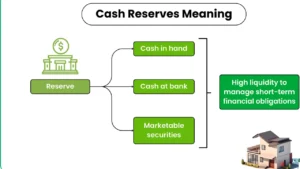
I think that is why my definition of reserves has changed over time.
Early on, reserves can feel like money that is not producing enough.
Later, you understand what they really buy.
They buy decision-making power.
- If a major repair appears, you can deal with the repair instead of first figuring out how to survive it financially.
- When a good opportunity comes along, you can evaluate it from a position of readiness.
- If the right deal does not come along, you can wait without convincing yourself that the wrong one is close enough.
There is something very peaceful about that.
“Available” Is a Purpose Too
I do not mean passive.
Cash should have a purpose. I want to understand why we are holding it, what level of reserves the business needs, and where capital could eventually create a better return.
But “available” is a purpose too.
Why Reserves Matter More as a Portfolio Grows
That concept became more important as my portfolio grew.
One property changes the way you think about cash.
Several properties change it again.
Now you are not only thinking about the next acquisition. You are thinking about multiple roofs, HVAC systems, insurance policies, loan maturities, renovation plans, and operating needs that do not politely coordinate their timing.
The more you own, the less impressed you become by the idea of putting every available dollar to work.
Some dollars need to stand guard.
That is a role.
The Emotional Value of Liquidity
I have also become more aware of the emotional value of liquidity.
Money pressure has a way of shortening your thinking.
When you need an outcome, you look at the decision differently.
- A sale feels more urgent.
- A refinance becomes something you are counting on rather than one option among several.
- You may accept terms you would normally reject because your need has entered the negotiation.
The same thing happens when buying.
If I know I can comfortably wait another six months, I negotiate differently than I do when I have convinced myself I need to close something this month.
That is not about playing games.
It is about removing desperation from the room.
Desperation is expensive.
It has probably ruined more good decision-making than a bad spreadsheet ever could.
Pressured Cash vs. Ready Cash
I think of reserves as a business-level emergency fund that also improves how you invest. Here is how the same investor behaves with and without that margin.
| Area | Investing Under Cash Pressure | Investing With Healthy Reserves |
|---|---|---|
| Buying standards | Marginal returns start to look acceptable | Standards stay where they belong |
| Deal assumptions | More generous because you are tired of waiting | Conservative, because waiting is an option |
| Major repairs | First you figure out how to survive it | You deal with the repair itself |
| Negotiating | Your need enters the negotiation | You can comfortably wait another six months |
| Sales and refinances | Something you are counting on | One option among several |
| When no right deal appears | The wrong one feels close enough | You wait until you actually want to say yes |
Financial Freedom Begins Before You Feel “Rich”
This is one reason I think financial freedom begins before somebody feels “rich.”
It starts when every dollar is no longer spoken for before it arrives.
There is margin.
- An unexpected expense does not automatically become a crisis.
- A missed opportunity is disappointing, but it does not create panic.
- You have enough breathing room to keep your standards where they belong.
That may not make an exciting social media post, but it makes for much better investing.
Discipline Rarely Gets Celebrated
I think our culture sometimes celebrates deployment more than discipline.
Someone buys another property and there is something to announce.
Nobody posts a closing photo for the deal they decided not to buy.
There is no ribbon-cutting ceremony for maintaining healthy reserves.
Cash sitting in an account does not look like progress.
Until the moment you need it.
Then suddenly the boring decision becomes one of the smartest decisions you made.
That has happened enough times in business that I no longer need every dollar to prove its usefulness every month.
- Some capital is there to produce a return.
- Some is there to protect the returns I have already created.
Knowing the difference is part of ownership.
Stewardship Means Preparing for Reality
There is also an ethical side to that for me.
If I have partners, employees, residents, or other people depending on decisions I make, I do not want to run the business so tightly that one surprise puts everyone under pressure.
Good stewardship includes preparation for things I hope never happen.
That is not pessimism.
It is respect for reality.
- Buildings age.
- Markets move.
- Expenses change.
- Plans take longer than expected.
The business deserves enough room to absorb some of that without immediately becoming unstable.
Knowing When Not to Move Your Money
I used to think the smartest investor was probably the person who could keep capital moving efficiently from one opportunity to the next.
Now I think there is another skill that matters just as much.
Knowing when not to move it.
- That requires confidence because waiting can feel unproductive.
- It requires discipline because there will always be another property someone can make sound exciting.
- Most of all, it requires knowing what you are building.
If the goal is simply to own more, cash sitting still will always feel frustrating.
If the goal is to build durable wealth, then liquidity belongs in the conversation too.
A Broader Definition of Money at Work
I still want my money working.
I just have a broader definition of work now.
- Sometimes money builds equity.
- Sometimes it creates income.
And sometimes it quietly sits there giving me the one thing that makes almost every financial decision better:
the ability to wait until I actually want to say yes.
Invest From a Position of Readiness
Knowing when to buy and when to wait starts with knowing your numbers. Our real estate workshop shows you how to analyze small multifamily deals, plan for reserves, and make offers you feel good about.
Want someone to test your deals with you? Join the Wealth Circle for monthly coaching calls and live deal reviews with Cynthia.